
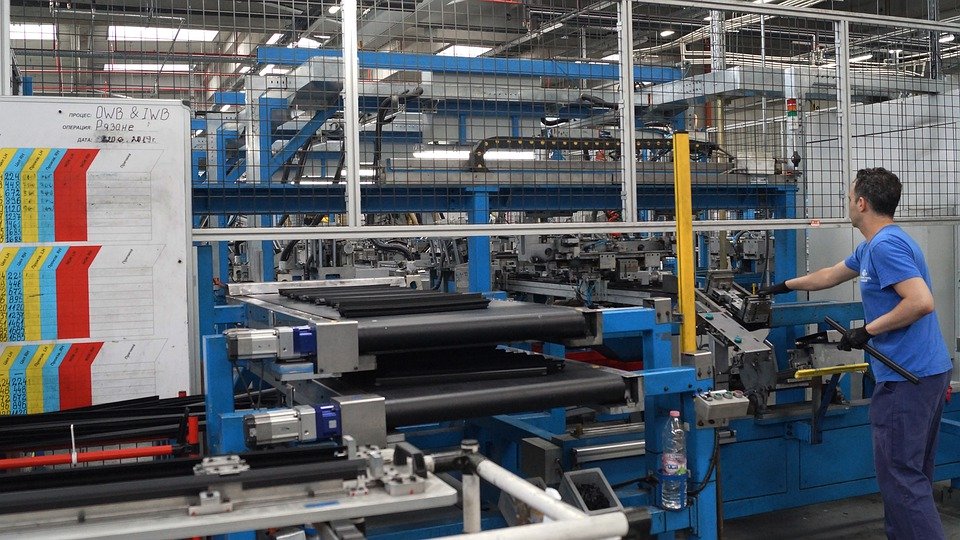
“If you think of standardization as the best that you know today, but which is to be improved tomorrow; you get somewhere.”
–Henry Ford
Talk to any CEO today, and he would cite standing out in the crowd as the highest business priority. Counter to the old school believe, part standardisation is a winning strategy for the manufacturing sector. Part standardisation advocates the fundamental perception of built-to-order, which enhances the operational readiness, mitigates the cycle cost and, increases competition, provides greater flexibility, breaks down organisational silos and improves customer satisfaction. Part standardisation empowers the electrical and mechanical engineer to pull parts in the assembly, instead of waiting for specialised and custom-built parts.
Nothing leverages your parts and training budgets like standardisation. The more you focus on part standardisation, the lower number of parts you maintain.
1) Cost reduction
According to research, part standardisation curbs down the manufacturing cost by close to 50%. Standardisation not only lowers the financial burden on the company, but lowers the transaction cost to the economy as a whole. Once, the company focuses on standardised parts, the cost of inventory comes down concurrently because the common parts are resupplied only when required, and you can avoid ordering expenses. Part standardisation mitigates the training cost associated to train employees about a new part. It diminishes the overhead costs, including the purchasing and bill payment costs.
2) Strengthens client and supplier relationship
Part standardisation positively affects the buying power of the manufacturing companies. It empowers the businesses to avoid dependencies on a particular supplier for the procurement of parts, thereby increasing the choices for the manufacturing company.
3) Greater flexibility
Standardisation brings the manufacturing sector one step closer to the goal of ‘Smart Factory.’ When standardisation is implemented across the entire supply chain, it reduces the set-up and inventory costs, thereby simplifying supply chain management. Also, when standardised parts are used to switch between different work centers become a cakewalk. You no longer restock components with every product switch.
4) Superior quality
Product quality improves with parts standardisation. Standardised components simplify picking and assembly processes, reducing the likelihood of manufacturing errors and improving overall operational consistency.
5) Increase in R&D
Manufacturing companies that overlook the standardisation of their process control expose their companies to the economic risk of R&D activities. The cost associated with R&D increases at a snail’s pace when you shift towards part standardisation.
Robycs Technology supports manufacturers and industrial businesses by helping them access precision CNC machining for standardised parts. Standardisation can significantly reduce the time mechanical engineers spend sourcing components, improving efficiency across design and production workflows. By streamlining access to the right machining capability, businesses can focus more effectively on their core operations.